
Soumyashree Mohanty, ImpactLens Correspondent
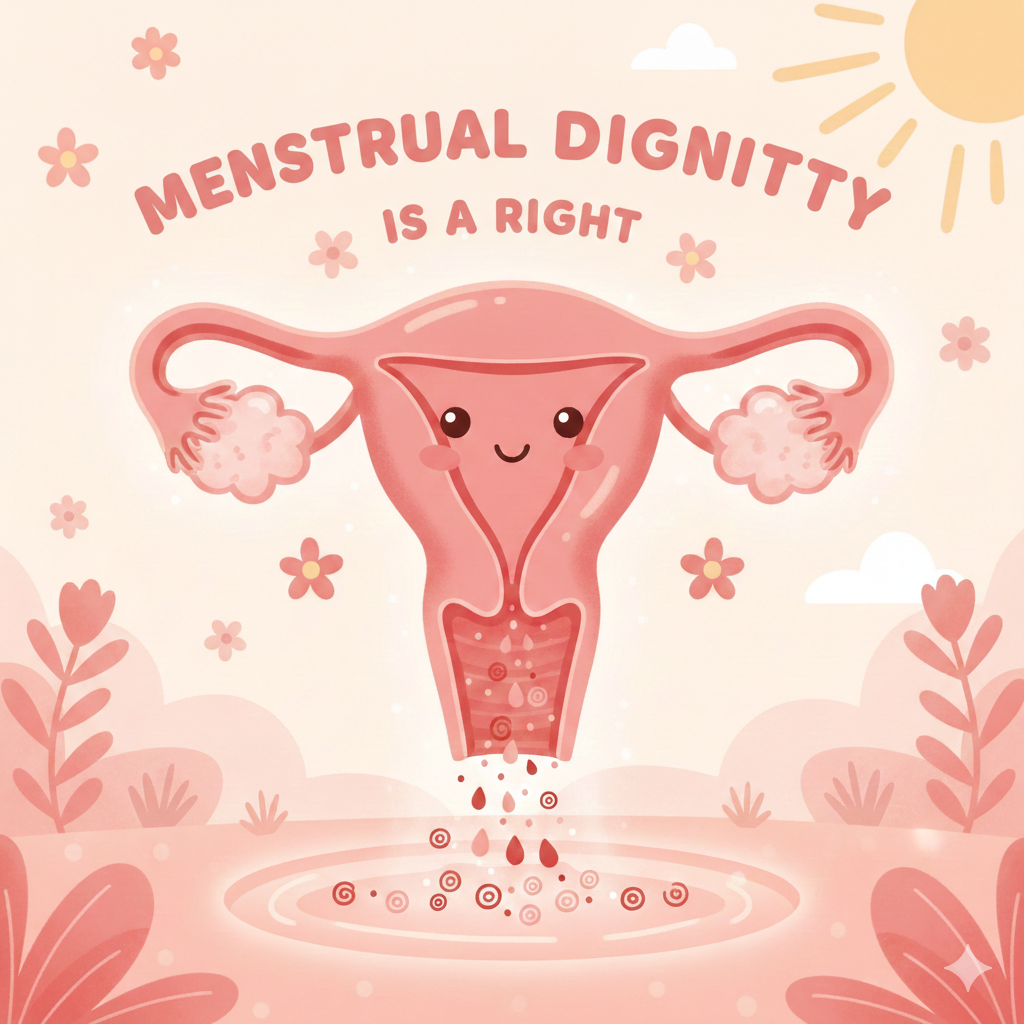
A period should mark the end of a sentence, not the end of a girl’s education.
The recent judgment by the Supreme Court of India recognising menstrual health and hygiene as part of the Right to Life under Article 21 of the Constitution of India is an important step towards gender justice and social equity. By placing menstrual health within the framework of dignity and life, the Court has given it constitutional importance.
Why this Judgment Matters?
As women, we often have to struggle for things that are basic rights. This raises an important question. Why should something as natural as menstruation require a fight for recognition? If we look closely, we see that women’s and girls’ bodies are often ignored in public policy and planning. Issues such as menstruation, pregnancy, childbirth, postpartum changes, and menopause do not receive the attention they deserve from decision makers, policymakers, educators and even parts of the medical system.
The Oscar-winning documentary Period. End of Sentence. shows this reality very clearly. The film captures the silence, shame and structural barriers surrounding menstruation. It reflects how a natural biological process is treated as something to hide. This silence has real consequences in the lives of girls and women.
Schemes and Policies for MHM in India:
In India, several schemes and policies have been framed to create a supportive environment for menstrual hygiene management in schools. However, in many places, these remain largely on paper, or there is limited awareness about them at the ground level. The importance of menstrual hygiene found space in the Right of Children to Free and Compulsory Education Act (2009), which includes standards for drinking water and separate sanitation facilities for girls and boys in schools. In 2011, the Supreme Court of India directed all states to prioritise separate toilets for girls and ensure drinking water in schools. The Menstrual Hygiene Scheme was later implemented by the Ministry of Health and Family Welfare to improve menstrual health knowledge among rural adolescent girls, promote better hygiene practices, provide subsidised sanitary products, and increase awareness in schools and communities.
Under the Swachh Bharat Mission and its school component, Swachh Bharat: Swachh Vidyalaya, guidelines were issued to strengthen sanitation in schools and emphasise menstrual hygiene facilities and awareness. The Rashtriya Kishor Swasthya Karyakram (2014) also includes menstrual health education and access to sanitary products as part of adolescent health services delivered through health workers and school platforms. The Samagra Shiksha Abhiyan (2018) provides support for sanitary pad vending machines, installation of incinerators for disposal, and awareness programmes for students and teachers. In 2024, the government introduced the “Menstrual Hygiene Policy for School Going Girls” to address harmful social norms, promote safe menstrual practices, and encourage environment friendly management of menstrual waste.
In addition to national schemes, states such as Kerala, Odisha, Uttar Pradesh, and Manipur have launched their own initiatives. These include providing free sanitary pads, installing napkin vending machines, setting up incinerators, and conducting awareness programmes in schools.
The Situation on the Ground
Despite the presence of multiple schemes on menstrual hygiene management in India, inadequate facilities still continue to affect girls’ education. Many schools still lack adequate toilets, clean water, safe disposal systems, or access to menstrual products. During menstruation, this makes it difficult for girls to attend school with comfort and dignity.
A report published in The Economic Times in 2023 highlights that poor sanitation facilities and a lack of menstrual products are major reasons why girls miss school during their periods. The report also notes that it is often not the distance to school that keeps girls at home, but the absence of proper facilities during menstruation.
Similarly, UNICEF reported in 2022 that nearly one-fourth of school-going girls in India remain absent during menstruation because of inadequate sanitation facilities and social stigma. These repeated absences affect learning. Over time, they increase the risk of girls dropping out, especially during adolescence. Recognising menstrual health as part of the Right to Life is therefore not only a legal milestone. It is a reminder that dignity must be visible in schools, policies and budgets. If we truly want girls to study and succeed, we must ensure that no girl stays home simply because she is menstruating.
Despite these efforts, data still show that many girls remain absent from school or drop out due to menstruation. Recent incidents reported in 2025 highlight that stigma and taboo around menstruation continue to exist. In some cases, girls were humiliated or harassed in schools simply because they were menstruating (to know more about it, click Educators Need Education Too — About Menstruation – Impactlens). These incidents show that while policies and schemes are important, real change requires proper implementation, monitoring, and a shift in attitudes within schools and communities.
What Must Be Done
The Court has rightly said that dignity cannot remain an abstract idea. It must be translated into action. India has schemes such as Beti Bachao Beti Padhao. The goal is to save the girl child and educate her. But we must ask an honest question. Are we creating a supportive environment for girls to stay in school, or are we implementing all MHM-related schemes? Measuring enrolment alone is not enough. We must also examine absenteeism and dropout rates. More importantly, we must understand the reasons behind them.
To improve this situation, we must address the systemic barriers that prevent girls from attending school during menstruation. Girls can attend school regularly only when they feel safe and comfortable, and when essential menstrual hygiene facilities are available. This requires a holistic approach.
Addressing Social Attitudes:
The behavioural approach focuses on awareness and social change. Many families and teachers still have a limited understanding of menstruation. The topic is often treated as taboo. This silence creates shame and confusion among girls.
Awareness sessions on MHM should be organised for girls, boys, teachers, school management members, and parents. Community discussions can help break myths and misconceptions. When menstruation is discussed openly, stigma reduces. When teachers and communities become supportive, girls feel confident to attend school and manage menstruation safely.
Improving School Infrastructure:
Behaviour change must be supported by proper facilities because awareness alone cannot solve menstrual hygiene challenges in schools. Schools must have clean, safe and private toilets for girls, with proper doors, functional locks and adequate lighting to ensure privacy and safety. Toilets must be cleaned regularly, as dirty or broken toilets discourage use and lead to absenteeism during menstruation. Continuous and clean running water is essential for washing hands, cleaning reusable products and maintaining personal hygiene. Lack of water increases the risk of infections and makes menstrual management difficult. Schools should also ensure access to safe, affordable menstrual products, including biodegradable or reusable pads, as many girls miss school because they cannot afford sanitary pads. Apart from this, guidance on safe use and disposal is equally important. Soap must be available in toilets because washing hands before and after changing menstrual products prevents infections. In addition, schools should provide a separate room or safe space where girls can change pads, manage discomfort or rest if required, which helps reduce anxiety and embarrassment. Information, Education and Communication materials should be displayed in classrooms and toilets to provide accurate information about menstruation and hygiene, normalise the topic, and encourage respectful behaviour among girls and boys.
These are basic requirements. Every institution must provide them. Public and private institutions, civil society organisations, and community members must work together to create safe school environments.
A Step Towards Change
Centre for Youth Development and Activities has taken concrete steps in this direction. In collaboration with government and CSR partners, CYDA has improved WASH facilities in more than 300 Zilla Parishad schools and 52 Ashramshalas across India. These improvements include better toilets, water facilities, and access to hygiene essentials that support girls during menstruation. CYDA has also established Dignity Rooms for girls. These rooms provide essential menstrual hygiene items and a safe, private space where girls can rest if they feel uncomfortable during their periods. The space also encourages open conversations. Girls talk freely about menstruation, share their experiences, and discuss myths and taboos. With support from IEC materials and trained peer educators, they receive accurate information and build confidence.
In addition, awareness sessions are organised for girls, boys, teachers and School Management Members. These sessions focus on promoting behavioural change and strengthening infrastructure. The aim is to ensure that schools not only have facilities but also create a supportive environment where menstruation is understood, respected, and managed with dignity.
Only enrolling girls in school is not enough. We must ensure that they have a safe and supportive environment where they can continue their education with dignity and confidence. Creating such an environment is not a choice. It is essential for their growth and future. If we fail to provide basic facilities and support, we fail to create an egalitarian society. In that case, all our schemes and promises will remain only aspirations on paper and will not bring real change to our girls’ lives.
References
The Economic Times. (2023, December 11). Lack of sanitation and menstrual hygiene products at schools causes girls’ absenteeism, says a report. https://economictimes.indiatimes.com/news/india/lack-of-sanitation-menstrual-hygiene-products-at-schools-cause-girls-absenteeism-says-report/articleshow/105906701.cms
UNICEF. (2022). Clean India: Clean schools. https://www.unicef.org/india/what-we-do/clean-india-clean-schools
