
The gig economy plays a significant role in India’s economic system. It offers flexible income opportunities across sectors. However, it is important to examine how women are positioned within this structure. This article by Shirin Bhattacharya, Assistant Professor at St. Mira’s College for Girls, explores the participation of women in the gig economy. It highlights both the opportunities and the challenges faced by women gig workers.
The participation of women in India’s gig-platform economy is steadily increasing, reflecting broader transformations in the nature of work, employment relations, and labour markets. Platform-based work has opened new avenues for income generation, flexibility, and mobility, particularly for young women and students. However, this emerging world of work is also characterised by precarity, algorithmic control, lack of social protection, and gender-specific challenges. As the employment landscape rapidly evolves, it becomes crucial to examine the lived realities of women engaged in gig work.
Against this backdrop, the Department of Sociology, St. Mira’s College for Girls (Pune), in collaboration with the Centre for Development Research and Impact (the research wing of the RUBAL Foundation), organised a discussion on 11 March 2026 to deliberate on one of the most significant emerging themes in contemporary labour markets, the rise of gig work and its implications for women workers.
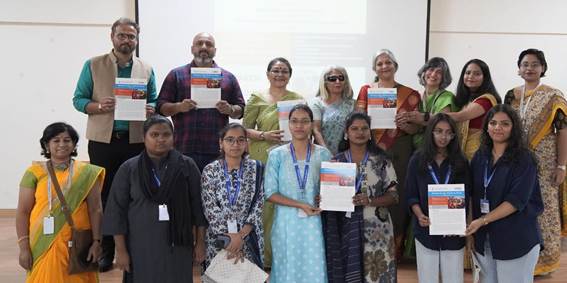
The discussion drew upon insights from a pilot study titled “Women in the Gig Platform Work”, jointly conducted by the Department of Sociology, St. Mira’s College for Girls, and the Centre for Development Research and Impact. The report, edited by Dr. Kuldeepsingh Rajput and Dr. Vaishali Joshi, presents field-based insights into the opportunities, vulnerabilities, and everyday experiences of women engaged in the gig-platform economy. On the occasion, the report was formally released by Dr Triveni Mathur (Media Expert), Chandan Kumar (Trade unionist and Founder of GIPSWU), Dr. Vaishali Joshi (Head, Department of Sociology), and Dr. Kuldeepsingh Rajput (Founder, RUBAL Foundation) in the presence of Dr. Neeru Bhagat, Principal of St. Mira’s College for Girls.
Opening the discussion, Dr. Vaishali Joshi emphasised the significance of the National Education Policy (NEP) 2020, which promotes bridging the gap between theory and practice through internships, experiential learning, and field engagement. She appreciated the collaboration with Dr. Kuldeepsingh and the RUBAL Foundation, noting that such initiatives enable college students to participate in rigorous field-based research on migrants and unorganised workers. According to her, these experiences help students understand the social inequalities shaped by caste, class, and gender, while also connecting academic knowledge with real-world challenges. This approach lies at the core of NEP 2020.
A particularly powerful segment of the discussion highlighted the lived realities of women gig workers. Ms. Sneha Vetal, a second-year Economics student from St. Mira’s College, shared her personal experience of working in the gig economy with Zepto. Sneha began working as a delivery partner two years ago to support her family financially and has since progressed to the role of a Customer Care Associate.

Sneha spoke about the encouragement she received from her supervisors, who supported her both professionally and academically. For Sneha, gig work not only provided financial stability but also helped her develop a sense of identity and dignity. Her story illustrated how gig work can serve as a pathway to empowerment, particularly for young women navigating financial responsibilities and educational aspirations.
Building on this, Dr. Triveni Mathur and Dr. Vaishali Joshi highlighted how gig-platform work is gradually increasing women’s visibility beyond domestic and private spaces. Mr. Chandan Kumar further reinforced this perspective by sharing experiences from his trade union. According to him, many women gig-platform workers are single mothers or women who are separated or going through divorce, relying on platform work to support themselves and their children. In this sense, gig work has begun to reshape gender roles within the labour market and the broader economy.
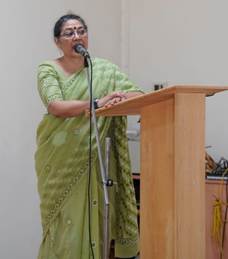
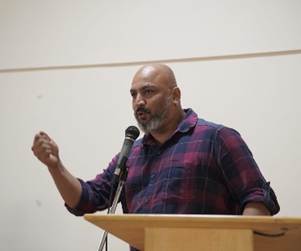
However, the discussion also critically examined the structural vulnerabilities of gig-platform work. Despite its opportunities, the gig economy remains a largely unorganised sector characterised by limited labour protections (Singh & Bhushan, 2023). Dr Kuldeepsingh Rajput pointed out that while states such as Rajasthan and Karnataka have introduced policies to support gig workers, Maharashtra still lacks a comprehensive policy framework to address the needs of platform workers. This gap becomes particularly concerning in situations such as health emergencies or sudden account suspensions, where workers lack social security safeguards.
Research also suggests that while gig workers appreciate features such as low entry barriers, flexibility, and supplementary income opportunities, they continue to demand greater platform accountability and policy intervention to ensure fairness (Sharma & Sharma, 2025). Reflecting on this issue, Mr. Chandan Kumar shared instances where women gig workers had their platform accounts blocked due to temporary absence from work, sometimes caused by health issues such as menstruation-related discomfort.
Another critical concern raised during the discussion was algorithmic management. Both Dr. Triveni Mathur and Mr. Chandan Kumar highlighted how algorithm-driven systems influence job allocation, ratings, and worker visibility on digital platforms. These systems, while seemingly neutral, may inadvertently reinforce existing social biases, including gender disparities. Some women gig workers have reported receiving fewer or less profitable assignments due to algorithmic preferences or patterns embedded within platform systems. Mr. Chandan Kumar further emphasised that in the era of artificial intelligence and automation, workers must remain aware of the technological transformations shaping labour markets. Understanding emerging technologies, he argued, is essential for workers to negotiate the growing influence of digital platforms and automated management systems.
In her concluding remarks, Dr. Triveni Mathur addressed the broader sociological implications of gig-platform work. She observed that when new forms of labour become socially legitimised, they also encounter entrenched social biases shaped by caste, class, and gender hierarchies. According to her, overcoming these perceptions requires a more gender-sensitive approach to labour policies and platform design. She highlighted the importance of collaboration between academia, social research institutions, and trade unions to address the emerging challenges of the gig economy. Such a tripartite engagement could play a crucial role in legitimising gig work and reducing social stigma associated with it.
The discussion concluded with an interactive session where participants raised questions about skills, safety, and the future of platform work. The speakers collectively emphasised that skill development in the 21st century should be guided by individual interests rather than rigid gender roles. Questions were also raised about the safety of gig workers and the need to revisit existing legal frameworks, such as the POSH Act, ensuring that workplace protections evolve in response to the changing nature of work and become inclusive of diverse gender identities. The session ended with a powerful statement from Dr Mathur, capturing both the challenge and the possibility of transformation in contemporary society: “Since patriarchy cannot be removed, it can certainly be negotiated.”
References
Rani, U., Castel-Branco, R., Satija, S., & Nayar, M. (2022). Women, work, and the digital economy. Gender & Development, 30(3), 421-435.
Sharma, A. K., & Sharma, R. (2025). The gig economy and the evolving nature of work in India: Employment, policy, and platform realities in the age of convenience. Journal of Digital Economy.
Singh, R., & Bhushan, V. (2023). The global workforce revolution: Exploring digital labour platforms and the gig economy in the era of globalization. International Journal of Civil Law and Legal Research, 3(2), 19-27.
Shirin Bhattacharya
Assistant professor
Saint Mira’s College for Girls, Pune.
