
By Shaheena Mehaboob, Project Coordinator, Goa
Supported by Persistent Foundation
Gender encompasses more than simply identifying as a boy or a girl; it involves the roles, opportunities, and responsibilities that society associates with each gender. Unfortunately, many of these expectations are based on old beliefs that limit what boys and girls can do. While girls are often expected to help at home, boys are often told to focus solely on their studies or outdoor work. True gender equality means giving everyone the same respect, rights and opportunities—at home, in school and in society.
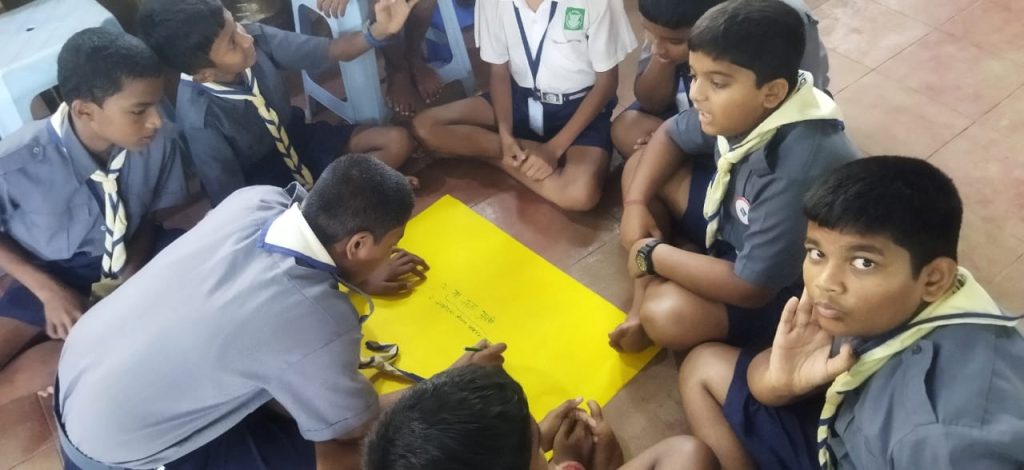
Here is the story of Pavan, a 13-year-old student studying in grade 7 at MIBK School, Goa, whose life changed after attending a gender equality workshop conducted by Centre for Youth Development and Activities. Through learning, reflection and action, Pavan broke the barriers of gender stereotypes and became an inspiring example for his peers. Pavan belongs to a middle-class family. Growing up, Pavan’s perspective of gender roles was that females should do all the housework and males should look after the outside work. He never thought of helping his mother, as he assumed that the work at home was the responsibility of women. nsfw
Every day, his mother worked tirelessly, while he spent time studying, playing, or watching television. His father, on the other hand, would rest after coming back from work. This scenario made Pavan think that boys should not work at home. The gender equality workshop helped students to understand how gender stereotypes create inequality. The workshop focused on gender equality through various stories, games, and role-plays. The session included stories of boys who cooked for their families, fathers who cleaned their homes, and men who supported women equally. For the first time, Pavan questioned his old beliefs. He realised that equality begins with action, not just words. Household work is not a woman’s job, it is a life skill that everyone should learn, says Pavan.
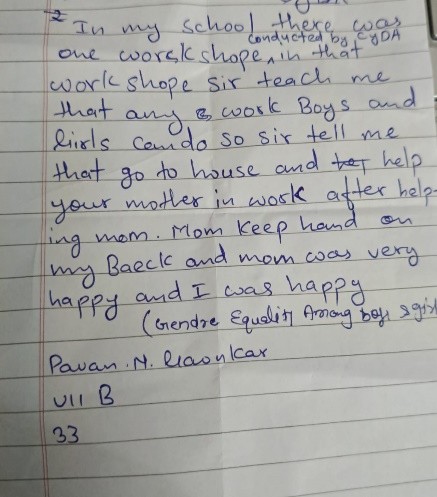
Motivated by what he learnt, Pavan started to support his mother from the very next day. He helped to fetch water and clean the utensils. When his father joked, “That’s your mother’s job,” Pavan smiled and replied confidently, It’s everyone’s job, Papa.”
Day by day, he took on more tasks – sweeping, arranging his books, and even helping in the kitchen. He learnt to make tea and chop vegetables. What began as a small effort soon became a routine part of his day. His mother felt proud and relieved, while his father started to notice the change. Slowly, even his father began helping occasionally.
Some of the friends teased Pavan, saying “You are doing girls’ work”. It was difficult for him to ignore their comments, but he remembered what the CYDA facilitator had taught and stayed confident in doing his duties. He explained to his friends that helping at home and showing care are not only the responsibilities of girls. Boys can also do this. Over time, his friends started discussing the idea of sharing chores at their own homes.
At home, Pavan’s mother felt supported and valued as the family began sharing responsibilities and communicating more effectively. At school, teachers noticed a significant change in Pavan – he had become more confident and demonstrated leadership qualities. He even spoke about gender equality during morning assemblies, inspiring his classmates to think about their own roles and behaviour. Through this journey, Pavan learned the values of empathy, respect, and responsibility. His way of thinking became more balanced and understanding. Within just a few months, teachers observed that 98.8% of students began practising gender-neutral behaviour. As Pavan says, “Equality is not about being the same; it is about sharing, caring, and respecting each other.”
