By Shaheena Mehaboob, Project Coordinator, Goa
Supported by Persistent Foundation
The WASH and Life Skills project is implemented by Centre for Youth Development and Activities (CYDA) at Matoshri Indirabai Baburao Khandepar (MIBK) School in Goa with support from the Persistent Foundation. It aims to empower adolescent girls by improving their understanding of health, hygiene, and emotional well-being, with a special focus on menstrual hygiene management (MHM). The primary goal of the sessions is to challenge the myths and misconceptions surrounding menstruation. The workshops help to break the silence and provide accurate information about menstruation.
A workshop on Menstrual Hygiene Management (MHM) was organised at Matoshri Indirabai Baburao Khandepar (MIBK) School in Goa. Kirthhi, a 13-year-old, had many questions and worries about menstruation. She didn’t know who to approach for help and was afraid of what others might think if she spoke up. She was also concerned about hygiene, staining her uniform, and being teased by classmates. Without open discussions and clear information, Kirthi’s confidence was low, and she often struggled with mood swings. Like many girls, she believed menstruation was something to hide. After attending the Life Skills and Menstrual Hygiene Workshop at school, organized by CYDA, Kirthi gained a better understanding of menstruation, and her fears began to fade. The session helped her understand menstruation as a natural part of life, something that didn’t need to be hidden or feared.
Prior to the actual workshop, CYDA conducted a pre-assessment to gauge the adolescents’ knowledge about menstruation. As part of the TARANG (Talking to Adolescents on Reproductive Health and Gender) program, CYDA facilitator introduced menstruation as a natural biological process, breaking myths and taboos through interactive learning methods. The workshop included games, visuals, and question–and–answer rounds, encouraging girls to ask questions without hesitation. Practical demonstrations taught participants how to use, change, and dispose of sanitary pads properly. The facilitator also emphasized nutrition, hygiene and emotional well-being, helping young girls understand the physical and psychological changes of adolescence.
The impact of the intervention was clearly visible in Kirthi’s behavior, attitude, and confidence. Her understanding of menstruation improved significantly, rising from 35% to 95%, as she learned that it is a natural process. She also gained a better knowledge of menstrual hygiene, with her understanding of proper hygiene practices increasing from 40% to 90%. Kirthi started using sanitary pads correctly and maintaining cleanliness. Her confidence grew as she became more comfortable discussing menstruation openly, with her ability to talk about it increasing from 30% to 85%. Instead of feeling embarrassed, she began seeing menstruation as a normal and healthy part of growing up. Kirthi also took on a leadership role, encouraging her friends to attend awareness sessions and volunteering to help teachers organize similar programs. Additionally, her relationship with her mother strengthened as they began having open conversations about menstruation, building trust and emotional support between them.
Following the workshop, the teachers conducted follow-up discussions in class, incorporated menstrual health into their lessons, and created a safe environment for open discussion. At home, Kirthi’s mother provided timely guidance on hygiene and supported her emotionally.
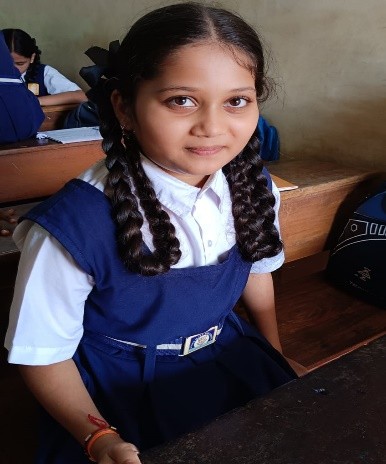
“Earlier, I used to feel very scared and shy to talk about periods. After the session, I understood it is natural and nothing to hide. I feel more confident now.”
— Kirthi, MIBK School
“We could see a visible change in Kirthi’s confidence after the CYDA workshop. She became more open and comfortable discussing sensitive topics.”
— Teacher, MIBK School
Awareness programs on puberty and menstruation can significantly change the outlook and confidence of adolescent girls. These sessions provide them with the knowledge they need, helping them view menstruation as a natural part of growing up rather than something to be embarrassed about. Creating safe spaces for open discussions encourages girls to ask questions freely, without fear of judgment. This openness helps to clear doubts and break down the myths surrounding menstruation. Moreover, collaborating with teachers and parents plays a key role in ensuring that these behavioral changes are sustained over time. When both educators and families are involved, they can support the girls in continuing to apply what they have learned, creating an environment where girls feel empowered and informed.
