By Dr. Nitin Jadhav, Joint Director, CYDA
I. A World in Constant Crisis
Over the past few decades, disasters have shifted from being occasional, exceptional events to becoming a regular and predictable part of global life.
- According to the World Meteorological Organization (WMO, 2023), between 1970 and 2021 (in 60 years), the world recorded nearly 11,778 weather, climate, and water-related disasters, which is five times higher than in the 1970s.
- These events have caused over 20 lakh deaths and economic losses exceeding 400 lakh crores (INR), i.e., $ US$4.3 trillion.
- On average, the world now faces more than one disaster per day, and the United Nations Office for Disaster Risk Reduction (UNDRR) estimates that by 2030, we may see 560 major disasters annually — a 40% increase compared to 2015.
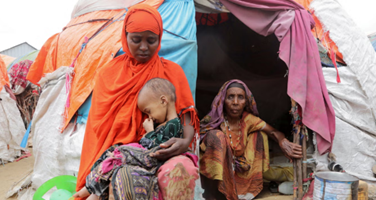
- The scale of displacement is equally alarming. In 2023 alone, disasters displaced 260 lakhs people globally, meaning that every second, one person is forced to flee their home due to floods, storms, or droughts.
- Heatwaves are breaking historic records; wildfires are consuming entire regions; and climate-linked food insecurity is threatening thousands of lacs.
These trends clearly show that disasters are no longer isolated emergencies. They have become part of a continuous global pattern of disruption, affecting every aspect of life — economy, health, migration, food, and security.
II. India’s Reality: Living with Disasters
For India, disasters are not new — but their frequency, severity, and unpredictability have increased drastically in the past decade.
- India is ranked among the top five most disaster-prone countries in the world, facing almost every kind of hazard imaginable: floods, cyclones, droughts, landslides, heatwaves, earthquakes, and even glacial lake outburst floods.
- The National Disaster Management Authority (NDMA) estimates that around 68% of India’s land area is vulnerable to drought, 59% is earthquake-prone, and about 400 lacs hectares are exposed to recurring floods.
- Every year, India faces around 8–10 major disasters, affecting crores of people.
- Between 2015 and 2024, over 320 million Indians were displaced by disasters — the third-highest figure in the world, according to the Internal Displacement Monitoring Centre (IDMC).
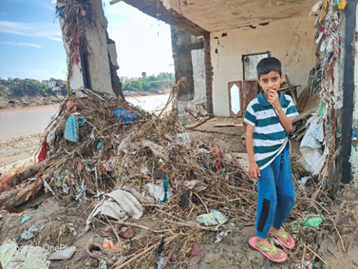
- In 2024 alone, over 54 lakh people were forced to leave their homes due to floods and cyclones — the highest in the past 12 years.
- The human and economic burden continues to increase. Extreme weather events killed more than 3,000 people in FY 2024–25, an 18% rise compared to the previous year. Economic losses are estimated at over ₹1 lakh crore (around US $12 billion) annually — a figure that continues to increase as urban and rural vulnerabilities deepen.
- Heatwaves have emerged as India’s new silent disaster. The country recorded over 90 heatwave days across 23 states in 2023, the highest number ever, with temperatures in several regions exceeding 48°C.
- Meanwhile, cyclones have grown stronger and more unpredictable – the Arabian Sea, once calm, has seen a 52% increase in cyclone activity since 1980.
III. The Climate–Disaster Connection
The sharp rise in disasters is closely linked to climate change. A warmer planet means more intense rainfall, longer dry spells, rising sea levels, and shifting monsoon patterns — all of which convert natural variations into destructive disasters.
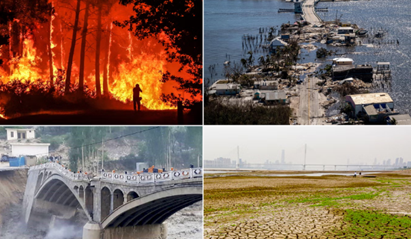
Scientific data clearly show that nine out of ten disasters worldwide are now climate-related. In India, climate change is amplifying floods, droughts, cyclones, and heatwaves. Extreme rainfall events have increased by over 50% since the 1950s, and severe cyclones have doubled in intensity. The Himalayan glaciers — which sustain major Indian rivers — are retreating faster than ever, leading to flash floods and glacial lake bursts in states like Uttarakhand, Himachal Pradesh, and Sikkim.
This intensification of hazards is coupled with social vulnerabilities — poverty, unplanned urbanization, and weak infrastructure — creating a cycle of recurring loss and recovery.
IV. CYDA’s approach and principles on Disaster Response (DR)
CYDA views disasters as complex events requiring a holistic approach encompassing immediate relief, rehabilitation, and long-term resilience building.
For CYDA, disaster response is not just about providing relief — it is about restoring dignity, rebuilding lives, and empowering communities to face future challenges with resilience. Over the past two decades, CYDA has evolved from an emergency relief organization to a youth- and community-driven resilience movement.
V. Guiding principles of CYDA on DR
- From Relief to Resilience: While emergency relief is essential, CYDA’s long-term focus is on rehabilitation and resilience-building — helping communities rebuild livelihoods, restore learning, and strengthen local institutions.
- People-centered Approach: CYDA believes that communities are not helpless victims but partners in recovery. Local knowledge, participation, and ownership are central to building sustainable solutions.
- Partnership and Collaboration: CYDA believes that multi-stakeholder collaboration — between government, corporates, NGOs, and communities — is key to scaling humanitarian impact. Each partnership strengthens the collective capacity to respond effectively.
- Youth as change leaders: Disasters offer a real-life platform for youth to demonstrate leadership, empathy, and civic responsibility.
- Integrated and inclusive response: Every disaster impacts multiple aspects of life — health, livelihood, education, and mental well-being. CYDA integrates these dimensions to ensure holistic and inclusive response, especially for children, women, and marginalized groups.
VI. CYDA’s Disaster Response: 2004–2025 – Key Interventions and Outcomes
| Case Study | Year | Support provided |
| Tsunami relief and rehabilitation in Tamil Nadu | 2004 | 300 volunteers mobilized; 107 families supported; 50 acres of farmland restored; 4 boats + nets distributed; eco-friendly school furniture worth ₹6 lakh provided. |
| Maharashtra flood (Pune, Sangli, Kolhapur and Solapur) | 2005 | 100+ volunteers; over 10,000 notebooks distributed; 100 children provided uniforms & study kits. |
| Kerala flood (Idukki, Alappuzha) | 2018 | 100 houses, 5 schools, 2 mosques cleaned; 9+10 schools retrofitted; 50 houses repaired; 105 families’ livelihoods restored (agriculture, livestock, beekeeping). |
| Maharashtra flood (Sangli, Kolhapur & Pune) | 2019, 2021-22 | Reached 2,250 people in Pune; 71 families supported in Kolhapur (27 with seeds, 36 goats, 3 cattle, 4 microbusinesses); 75 volunteers engaged. |
| COVID-19 Pandemic Support | 2021-22 | 06 international, 08 national, 06 CSR, 12 NGOs + 100 volunteers reached 5,00,000+ people; 13 hospitals supported; 400-bed care center set up; 3,500 migrants fed; 150 microbusinesses revived. |
| Maharashtra Floods (Kolhapur, Sangli, Satara) | 2021–2024 | 27,500 families reached in 157 villages; 30 PwDs supported; 27500 kits distributed; 400 teachers/AWWs and 1812 caregivers trained. |
| Maharashtra (Satara) landslides & floods | 2022-23 | 416 families affected; 150 relocated to schools; supported with dry ration and essential kits. |
| Kerala (Wayanad) floods & landslides | 2024 | 600 hygiene kits, 500 tarpaulins, 500 gumboots, 500 dustbins distributed; septic tank installed at Mapped camp. |
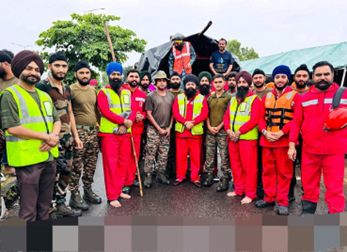
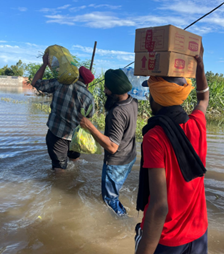
| Punjab floods (Gurdaspur & Amritsar) | 2025 | 3100 Immediate Food Items Kits, drinking water, ready-to-eat foods, dry ration kits, hygiene kits; 360 litres of diesel support to JCB machines for building the Bund, population benefited from 10 villages; 150 kits of animal Fodder benefited 150 animals. |
| Jammu & Kashmir floods | 2025 | 55 families (330 people) in Rajeev Nagar received kits with utensils, hygiene, and cleaning materials. |
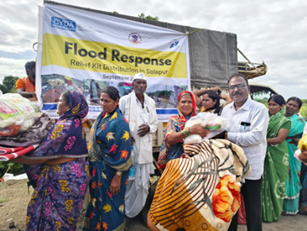
| Maharashtra flood (Solapur, Dharashiv and Beed) | 2025 | A total of 202 kits were distributed in 5 villages, containing 20 essential items with 04 types of relief kits: ration, personal hygiene, ready-to-eat food items, and essential household material. 133 blankets and mats were distributed in 5 villages; 153 patients from affected families in 4 villages were examined and treated. |
Response of CYDA to the COVID-19 Pandemic – Worldwide disaster
The COVID-19 pandemic was one of the most widespread global disasters in recent history, affecting lives and livelihoods across every region. CYDA responded swiftly through its campaign “No One Shall Go Hungry”, mobilizing over 100 volunteers, 300 individuals, and more than 20 partner organizations, including international agencies, corporate CSR units, and NGOs.
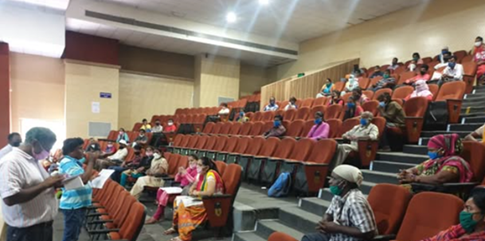
The initiative reached over half a million people, providing food, hygiene kits, and medical support. CYDA also supported 13 hospitals and 8 dispensaries in Pune with biomedical waste management equipment, PPE kits, and handwashing stations, and established a 400-bedded COVID Care Centre at Chikhli.
In addition, CYDA assisted migrant workers by offering cooked meals, travel support, and temporary shelter. This multi-stakeholder, youth-driven response demonstrated CYDA’s capacity to manage a global-scale humanitarian crisis with efficiency, compassion, and community partnership.
The contribution of CYDA during COVID is as follows-
| Sr | Activities | Achievement |
| People reach out through various campaigns | 48,23,500 | |
| People facilitated to get vaccinated | 20,41,220 | |
| Mask distribution | 6,26,450 | |
| Families will be supplied with nutritious food for a minimum of 20-30 days | 50,500 | |
| PPE kits distribution | 13000 | |
| Families’ livelihood revised post-COVID | 8220 | |
| Volunteer/Interns mobilized | 1135 | |
| Youth Job Placements | 365 | |
| COVID orphaned children supported to continue their studies and grow up | 365 | |
| Oxygen Cylinders to Kerala | 85 | |
| Health facilities/Covid Care Centers supported to improve infrastructure | 67 | |
| Health facilities lifesaving equipment to Nandurbar | 45 | |
| Yerwada Covid Care Management | 01 | |
| Establish 3 COVID care centre in 2 Pune, 1 in Satara | 3 |
Overall Outcomes (2004–2025)
- 21 years of continuous disaster response & recovery.
- 9 States with 25 districts covered
- 600,000+ people reached (approx. 1.2 lakh families) across India.
- 500+ youth volunteers trained in disaster management.
- Multi-sector partnerships: UNICEF, Plan International, CAF, corporates, and local governments.
VII. Way Forward: Towards a resilient and prepared CYDA
1. Institutionalization of disaster preparedness and resilience
CYDA will move from ad-hoc response mechanisms to a systematic disaster preparedness framework. This includes constituting a dedicated team to develop a CYDA Disaster Preparedness and Response Framework (DPRF) and SOPs with clear protocols for coordination, logistics, and communication.
2. Integration of climate change interventions with DRR
Recognizing that climate change is a key driver of disasters, CYDA will align its programs with climate adaptation and mitigation goals. Approaching EU, USAID, DFAT, and SDC for DRR and climate resilience projects.
3. Focus on Knowledge, learning, and documentation
Each disaster provides critical learning. CYDA plans to build a knowledge hub on Disaster and Resilience to capture, share, and scale best practices.
- Document field experiences, case studies, and impact stories.
- Publish annual “CYDA Disaster Impact Reports.”
- Conduction of regular staff capacities building workshops.
- Establishment of a Village Resilience Team (VRT) with 20–30 trained youths in the current CYDA’s DR areas.
- Development of a module on disaster preparedness and resilience, focusing on youth engagement.
4. Collaborations and partnerships-
- Collaboration and alignment with state and national government disaster and climate programs and bodies such as National/State/District Disaster Management Authority and Disaster Relief Force
- Collaborate with universities and development agencies for research partnerships. To undertake impact studies, capacity-building modules, and knowledge products.
VII. Funding Strategy and Opportunities for CYDA’s disaster preparedness and response-
CYDA recognizes that sustainable disaster preparedness and response require consistent financial support beyond emergency-driven relief.
The overall goal is to ensure that no disaster intervention is delayed due to a lack of resources and that communities continue to receive long-term support for rebuilding lives and livelihoods.
- Raising/allocating a “Rapid Response Fund” for immediate deployment during emergencies. Initial Target: ₹1 crore seed fund from mixed sources (CSR + individual donors).
- Expansion partnerships with companies already engaged during COVID & flood responses (Tata Motors, Kirloskar, Zensar, etc.)
- Building CSR consortia for disaster-prone states aligned with CYDA’s intervention states.
- Strengthening or reestablishing relationships with global humanitarian and development organizations. (UNICEF, Plan International, Terre des Hommes (Tdh Germany, CAF India,)
References-
– https://www.internal-displacement.org/global-report/grid2024
– https://www.undrr.org/gar2022
– https://public.wmo.int/en/media/news/wmo-reports-weather-climate-water-related-disasters-2023
– https://www.unicef.org/india/what-we-do/disaster-risk-reduction
– https://ndma.gov.in/sites/default/files/PDF/Reports/NDMA_Annual_Report_2021-22.pdf
– https://asdma.gov.in/pdf/publication/undp/disaster_management_in_india.pdf
