
RUBAL Foundation’s Study Exposes Harsh Realities of India’s Fast-Growing Gig Economy. Are Gig Platforms Empowering or Exploitative? A Policy Lens on Precarious Work.
By ImpactLens Correspondent.
Pune, Dec 09: On Human Rights Day, the RUBAL Foundation and ImpactLens placed a stark spotlight on one of India’s fastest-growing yet most vulnerable labour groups: gig and platform workers. The event, held at Patrakar Bhavan, Pune, convened activists, researchers, policymakers, corporate leaders, and students to examine the hidden tensions of a booming gig economy, an economy celebrated for innovation but fraught with insecurity, power imbalance, and policy neglect.
The programme opened with a tribute to veteran labour leader Baba Adhav, whose lifelong advocacy for unorganised workers set a moral foundation for the day’s discussions. His legacy framed the central question: as India’s gig economy expands at unprecedented speed, are we reproducing old forms of exploitation in technologically upgraded ways?
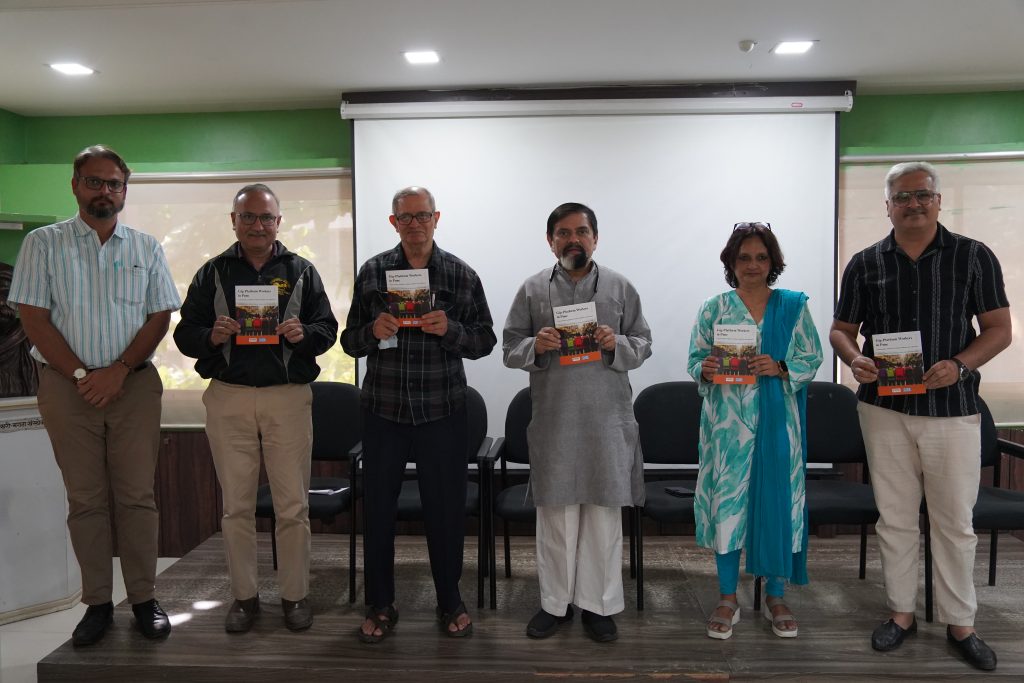
In his welcome address, Dr. Nitin Jadhav, on behalf of ImpactLens, traced the origins of the word “gig”—once used by musicians in the 1920s, now repurposed to describe short-term, flexible, and on-demand work mediated through apps. While digital gig work is often marketed as freedom, flexibility, and entrepreneurial opportunity, Dr. Jadhav emphasised the irony: “Workers are free only in the sense that they are free from protections, free from benefits, and free from stability.” This framing set the stage for deeper reflection on the vulnerabilities embedded in gig and platform-based work.
Dr. Kuldeepsingh Rajput, Founder of RUBAL, clarified the distinction between gig workers (informal, contract-based workers) and platform workers (those assigned tasks via digital platforms). Drawing from the NITI Aayog projection, he noted that India’s gig workforce may jump from 7.7 million in 2020–21 to 23.5 million by 2029–30, marking one of the most dramatic labour shifts in modern India.
But the question remains: a shift toward what? For many, it is a shift toward greater informalisation, reduced bargaining power, and algorithm-driven work pressure.
A key highlight of the event was the release of the RUBAL research report, “Study of Gig-platform Workers in Pune: Understanding Livelihoods, Working Conditions, and Aspirations,” which covered 205 workers.
The findings paint a worrying picture:
- 89% felt they urgently needed upskilling
- 62% had no formal agreement with the platforms
- 89% experienced constant algorithmic and customer pressure
- 43% admitted to unsafe driving due to stress
- 13% met with accidents while on duty
- 72% bore their own medical expenses due to lack of coverage
These numbers underline what activists call the invisible cost of convenience—borne entirely by workers powering India’s digital service economy.
Platforms: Empowering Innovation or Extractive Machines?

Economist and author Dr. Achyut Godbole argued that gig work cannot be understood in isolation. It is a by-product of globalisation, privatisation, and neoliberal reforms, which outsource risk to workers while centralising profit with platforms.
He described gig workers as “scattered, isolated, and unorganised—making them easy to exploit and difficult to mobilise.”
Unlike factory workers of previous generations, gig workers rarely meet each other physically. Algorithms assign tasks, evaluate performance, and even determine pay—creating a system where the worker is controlled not by a visible employer but by an invisible machine.
This raises a fundamental question: Are gig platforms employers, intermediaries, or digital landlords?

Health Risks Hidden Behind the Digital Interface. Senior health activist Dr. Anant Phadke highlighted severe health hazards that often go unnoticed:
- Long working hours without breaks
- Frequent exposure to accidents
- Chronic fatigue due to extended rides
- Stress-induced unsafe practices
- Lack of safety nets or compensation
He cautioned that the positive narrative of “flexible work” hides the precarious, exhausting, and high-risk reality of gig labour. Even when health schemes exist, workers often struggle to access benefits due to poor linkage, lack of awareness, or restrictive eligibility criteria.

The Migrant Worker Angle: Double Vulnerability. Sustainability expert Ms. Priti Kibe drew attention to the migrant workforce that forms the backbone of delivery and ride-hailing apps. Migrants face:
- Poor housing
- Social exclusion
- Lack of documentation
- No access to social protection schemes
- High dependence on gig work for survival
She noted that “short-term charity or one-time support will not solve their problems. What migrants need is long-term livelihood stability and rights-based protection.”
Are Gig Platforms Exploitative by Design? The debate around exploitation emerged strongly. While some argue that gig platforms create income opportunities, panellists highlighted several structural issues that tilt the balance:
Power Asymmetry: Platforms decide pricing, incentives, penalties, and visibility. Workers have no negotiation space.
Algorithmic Control: Digital systems track speed, acceptance rate, customer ratings—leading to constant pressure and fear of deactivation.
No Social Protection
Workers lack:
- Health insurance
- Accident compensation
- Paid leave
- Retirement benefits
- Job security
Income Instability: Earnings fluctuate wildly due to demand, fuel prices, commissions, and incentive cuts.
Misclassification: Workers are labelled as “partners” or “independent contractors,” but functionally treated like employees—without the benefits of employment.Taken together, these patterns signal that platforms often externalise risk while internalising profit—a hallmark of exploitative systems.
The Way Forward: A Policy Roadmap
All speakers emphasised urgent policy reforms. Key recommendations include:
- Recognise gig workers as workers, not partners or freelancers.
- Create a national social-security framework ensuring health insurance, accident coverage, and a pension.
- Ensure fair contracts, transparent payment rules, and grievance redress mechanisms.
- Regulate algorithms to avoid excessive surveillance and unreasonable penalties.
- Promote worker collectivisation to strengthen bargaining power.
- Introduce safety standards, especially for delivery and transport workers.
- Establish public digital infrastructure to reduce monopoly control by large platforms.
Conclusion: As India’s Gig Economy Surges, Workers Must Not Be Left Behind. The event ended with a collective call for justice, dignity, and visibility for gig workers—workers who fuel India’s food delivery, transport, logistics, home services, and e-commerce boom.
Gig work offers flexibility and income for millions. But without regulation, accountability, and social protection, flexibility becomes fragility and innovation becomes exploitation.
As the RUBAL study makes clear, India now stands at a policy crossroads:
Will the gig economy become a model of inclusive growth or a modern factory of silent exploitation?
ImpactLens will continue to follow the evolving journey of India’s gig workers—the invisible engines of our on-demand world.
