
The death of a migrant labourer in Walayar, Palakkad district, Kerala, on 17 December 2025, following a brutal public assault by a civilian mob, is not an isolated criminal incident. It is a grave reminder of how migrant workers in India, particularly those employed in informal and precarious labour, remain exposed to violence, discrimination and institutional neglect. Framing this death merely as a case of vigilantism obscures a more profound and more troubling reality: the failure of the State to uphold its constitutional, legal and international human rights obligations.
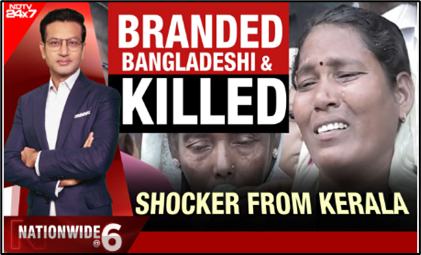
According to multiple media reports, the victim, later identified as Ramnarayan Baghel (31 years), a migrant worker from Chhattisgarh, was apprehended by residents on suspicion of theft, assaulted over a prolonged period and later succumbed to his injuries (NDTV, 2025; The Hindu, 2025). The incident occurred in a public space, in full view of bystanders, raising serious questions about the absence of timely police intervention and preventive mechanisms. The Kerala State Human Rights Commission took suo motu cognizance of the case, acknowledging its gravity. However, accountability cannot stop at arrests; it must extend to the systemic failures that enabled such violence.
Extra-Judicial Punishment and the Rule of Law
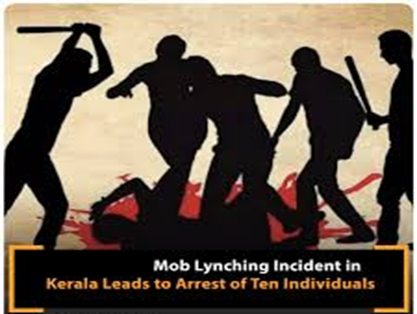
The Walayar incident constitutes a precise instance of extrajudicial punishment, where civilians assumed the role of judge, jury and executioner. The Supreme Court of India has unequivocally held that mob violence strikes at the heart of constitutional governance. In Tehseen S. Poonawalla v. Union of India (2018), the Court recognised lynching as a “horrendous act of mobocracy”. It imposed binding obligations on States to prevent, investigate and punish such acts. These include preventive policing, victim compensation, fast-track trials and disciplinary action against officials for dereliction of duty. The recurrence of mob violence despite these directions reflects not merely enforcement gaps but a deeper erosion of the rule of law. When the State fails to intervene in foreseeable violence, it becomes complicit through omission.
Right to Life and State Responsibility
Article 21 of the Constitution of India guarantees the right to life and personal liberty to all persons, irrespective of citizenship or place of origin. Judicial interpretation has consistently expanded this right to include a positive duty on the State to protect life. The Walayar case demonstrates a serious breach of this duty. The prolonged nature of the assault, the absence of immediate police response and the failure to protect a visibly vulnerable individual point to institutional negligence rather than an unforeseeable act of violence.
Under international law, India’s obligations are equally clear. As a State Party to the International Covenant on Civil and Political Rights (ICCPR), India is bound to protect the right to life under Article 6. The UN Human Rights Committee has clarified that States must exercise due diligence to prevent, investigate, punish and redress harm caused by private actors (UN Human Rights Committee, 2018). Failure to do so engages State responsibility under international human rights law.
Migrant Labour, Informality and Structural Vulnerability
Migrant workers in Kerala, estimated to number over three million, sustain key sectors such as construction, manufacturing and services. Yet, they remain largely excluded from formal labour protections. Weak implementation of the Inter State Migrant Workmen Act, 1979 and limited coverage under the Occupational Safety, Health and Working Conditions Code, 2020 have rendered migrant workers socially invisible and legally precarious. The International Labour Organization recognises migrant workers as a group requiring enhanced protection due to their exposure to exploitation, violence and discrimination (ILO, 2015). ILO Conventions No. 97 and No. 143 mandate equality of treatment and protection from abusive conditions. Moreover, the Violence and Harassment Convention, 2019 (No. 190), affirms that violence against workers, whether occurring at the workplace or arising from employment related vulnerability, constitutes a violation of labour rights and human dignity (ILO, 2019).
The Walayar death illustrates how labour informality intersects with social prejudice. Reports indicate that during the assault, the victim was repeatedly questioned about whether he was “Bangladeshi”, despite being an Indian citizen and no stolen property was recovered from him (NDTV, 2025). This racialised misidentification was not incidental; it functioned as a mechanism of dehumanisation, enabling the mob to suspend the presumption of innocence and legitimise collective violence.
Xenophobia, Racialisation and the Politics of “Foreignness”
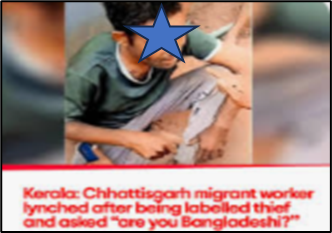
The labelling of the victim as “Bangladeshi” reflects the growing criminalisation of migrant and non-local identities in India. Such narratives of foreignness convert economic migrants into perceived security threats, making them uniquely vulnerable to mob violence. This form of racialisation violates Articles 2 and 26 of the ICCPR, which guarantee non-discrimination and equal protection of the law. The UN Human Rights Committee has emphasised that States must address not only acts of violence but also the structural and ideological conditions that make such violence foreseeable (UN Human Rights Committee, 2018). In the Walayar case, the public nature of the assault, its duration and the absence of timely intervention indicate a failure of preventive governance in a context already shaped by xenophobic suspicion. This convergence of prejudice and informality renders migrant workers legally and socially disposable, a condition fundamentally incompatible with constitutional morality and international human rights standards.
Business, Human Rights and Ethical Labour
From a business and human rights perspective, the incident raises serious concerns. The UN Guiding Principles on Business and Human Rights (UNGPs) establish the State duty to protect against human rights abuses by third parties, including within labour supply chains (United Nations, 2011). When migrant labour is systematically informalised and excluded from protection, both State and business actors benefit from a model that externalises risk onto the most vulnerable. Ethical labour cannot exist in an ecosystem where workers are criminalised, dehumanised and left unprotected. The absence of accountability undermines Kerala’s otherwise progressive reputation on human development and labour welfare.
Call for International Attention and State Accountability
The gravity of the Walayar case warrants engagement beyond routine criminal proceedings. There is a compelling basis for intervention by UN Special Rapporteurs on extrajudicial executions, on the human rights of migrants and on contemporary forms of racism and discrimination. Such engagement would not undermine sovereignty but reinforce India’s voluntarily assumed international obligations. For the Government of Kerala, accountability must be structural and corrective. This includes an independent inquiry into policing and administrative failures, adequate compensation and rehabilitation for the victim’s family, strict enforcement of migrant worker registration and welfare mechanisms and full implementation of Supreme Court directives on mob violence. Preventive measures, including migrant sensitive policing and community level anti discrimination initiatives, are essential guarantees of non recurrence.
The death of a migrant labourer in Walayar is not an aberration; it is a warning. It exposes how easily the lives of migrant workers can be rendered disposable when prejudice, informality and State inaction converge. Upholding the right to life requires more than arrests after death. It requires a State that acts decisively to prevent violence, protect the vulnerable and affirm that justice does not depend on where one comes from, or the work one does.
(The article is written by Jinu Sam Jacob, CYDA)
References
- International Labour Organization. (2015). ILO global estimates on migrant workers. ILO.
- International Labour Organization. (2019). Convention No. 190: Violence and Harassment Convention. ILO.
- NDTV. (2025, December 21). Migrant worker lynched in Kerala after being mistaken as Bangladeshi. NDTV.
- The Hindu. (2025, December 21). Kerala migrant labourer dies after mob assault in Walayar. The Hindu.
- United Nations. (1966). International Covenant on Civil and Political Rights.
- United Nations. (2011). Guiding Principles on Business and Human Rights. UN Office of the High Commissioner for Human Rights.
- UN Human Rights Committee. (2018). General Comment No. 36 on Article 6: Right to life.
- Tehseen S. Poonawalla v. Union of India, (2018) 9 SCC 501.
- United Nations. (2020). Report of the Special Rapporteur on contemporary forms of racism, racial discrimination, xenophobia and related intolerance. UN Human Rights Council.
