
Somnath Dabhade, Assistant Director, CYDA
We are all aware of the ongoing war and its impact on daily life. One of the major challenges emerging from this situation is the shortage and rising cost of LPG gas. This has directly affected household cooking and increased the financial burden on families, especially in rural areas. However, even before this crisis, CYDA, in collaboration with PwC Foundation, had taken an important step towards building a sustainable and self-reliant ecosystem. The initiative encouraged villagers in Fulenagar, Nashik, to adopt biogas as an alternative energy source. This proactive approach has now become highly relevant in the present situation. This article highlights how the adoption of biogas in Fulenagar village has not only supported environmental sustainability but also strengthened household self-reliance during the current crisis. It stands as a practical example of how early planning and sustainable solutions can help communities face unexpected challenges.
In Fulenagar village, once mornings began with smoke. Before sunrise, women would step out of their homes with baskets in hand, walking long distances in search of firewood. It was a routine repeated every day—physically exhausting, time-consuming, and unavoidable. Back home, kitchens would soon fill with thick smoke as traditional chulhas were lit. Eyes burned, coughing was common, and breathing felt heavy. Cooking a simple meal often came at the cost of health and comfort.
LPG, though cleaner, was expensive and unreliable for many families. Rising fuel prices added financial pressure, while shrinking access to firewood made life even harder. For households dependent on agriculture, where income is uncertain and seasonal, these daily challenges only deepened their vulnerability.
But something began to change. Under the Integrated Rural Development Program, implemented by Centre for Youth Development and Activities (CYDA) with financial support from the PwC Foundation, biogas installations were introduced as one key intervention. A thoughtful step toward improving rural livelihoods in a sustainable way.
Installation of Biogas:
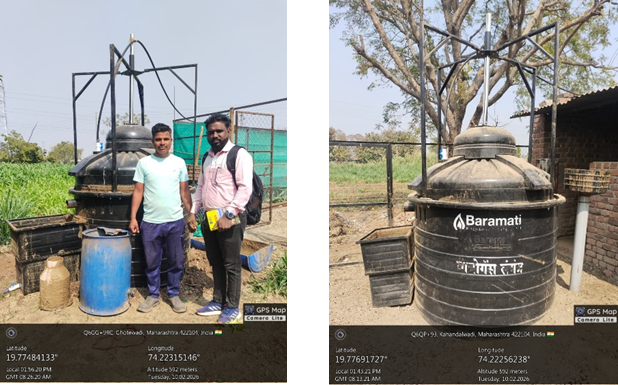
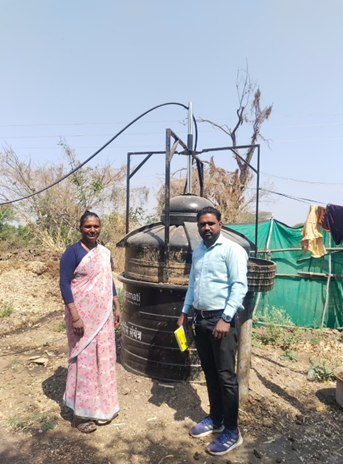
10 biogas units were installed in Fulenagar. Each unit, with a capacity of 2 cubic metres, was provided to farming households that already owned cattle. These 10 households together represented 72 individuals, with an average family size of more than 7 members. Their connection to agriculture and livestock made them ideal participants for this intervention.
At first, the biogas units were seen with curiosity.
- Would they really work?
- Would they be easy to manage?
- Would they make a difference?
Months later, the answers are clear. All 10 biogas units are fully functional, providing between 2 and 4 hours of clean gas every day. What once seemed like a small experiment has now become an essential part of daily life in the village.
Impact of the Bio Gas Units:
Improved Access to Clean Energy
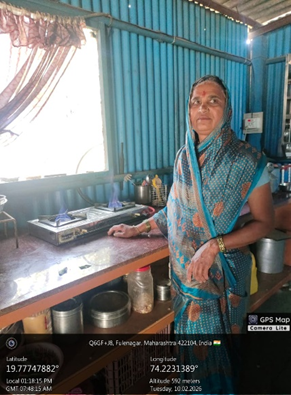
Now, mornings in Fulenagar look very different. There is no rush to collect firewood. No long walks. No heavy loads. Instead, households use cattle dung—readily available and once considered waste—to produce clean energy right at home. Cooking has become quicker, easier, and smoke-free.
Reduction in Time and Drudgery
For women, this shift has been life-changing. Earlier, an average of 2.1 hours each day was spent collecting firewood. Now, this has been reduced to about 1 hour. That means nearly 30 extra hours every month—time that can be spent on farming, caring for family, pursuing small income activities, or simply resting. The physical strain has reduced. The constant fatigue has eased. Daily routines are more predictable. Life feels more manageable.
Cost Savings on Fuel
The economic impact of this change is equally significant. Before adopting biogas, households spent around ₹950 every month on fuel. Today, that cost has dropped sharply to ₹273. Each household now saves about ₹677 every month, which adds up to ₹8,124 annually.
Increased Household Savings
For all 10 households together, this means a total annual saving of over ₹81,000. In rural households where every rupee matters, this is not just a number—it is relief. It means better food on the table, the ability to afford school expenses, or reinvestment into farming activities.
Use of Bio-Slurry as Organic Fertilizer
But the benefits of biogas extend beyond the kitchen and household budget. Each biogas unit produces bio-slurry—a nutrient-rich organic fertilizer. Initially, many farmers were unsure about its effectiveness. But as they began applying it to their fields, the results spoke for themselves.
Improved Soil Health and Crop Growth
The soil became softer and more fertile. Crops showed healthier growth. Moisture retention improved. Over time, the need for chemical fertilizers began to reduce. Today, all 10 households are using bio-slurry in their fields.
Reduction in Farming Costs
This shift has not only improved soil health but also reduced farming costs. Farmers are now saving an estimated ₹20,000 to ₹25,000 per year on fertilizers, depending on their land size and cropping patterns. What was once waste is now a valuable resource—closing the loop between energy and agriculture.
Reduction in Firewood Consumption
The environmental impact of this intervention is just as powerful. With biogas replacing firewood as the primary cooking fuel, each household has reduced its firewood consumption by about 60 to 70 kilograms every month. Across all 10 households, this amounts to nearly 7,200 kilograms of firewood saved annually. This reduction directly translates into tree conservation. On average, each household is saving around 3 trees every year. Together, the village is protecting approximately 31 trees annually. Over the lifespan of these biogas units, this number could grow to more than 300 trees—an important contribution to environmental sustainability and local ecological balance.
Improved Indoor Air Quality
Inside homes, the change is immediate and visible. The smoke that once filled kitchens is gone. Walls are cleaner. Air feels lighter. Women and children, who spend the most time indoors, are no longer exposed to harmful pollutants.
Better Health Outcomes
Families report fewer health issues such as coughing, eye irritation, and breathing problems. Cooking is no longer associated with discomfort—it has become safer and healthier.
Increased Awareness and Behaviour Change
Beyond these tangible benefits, something deeper has also changed in Fulenagar: awareness. All beneficiary families now understand that biogas is not just convenient—it is environmentally responsible. They recognize how it reduces carbon emissions by replacing firewood and LPG, and by capturing methane that would otherwise be released into the atmosphere. This awareness has translated into strong acceptance. Every single household using biogas has expressed high satisfaction. In fact, all of them describe themselves as “very satisfied” and are willing to recommend this solution to others in nearby villages.
The story of Fulenagar is not about a large-scale transformation driven by massive infrastructure. It is about a simple, well-planned intervention—biogas installation—implemented as part of a larger development vision. It shows how one activity, when designed thoughtfully and aligned with local needs, can create a multi-dimensional impact:
- Reducing household expenses
- Saving time and labour
- Empowering women
- Supporting sustainable agriculture
- Protecting natural resources
- Improving health and well-being
In a world where rural communities are facing increasing pressure from rising costs and climate challenges, Fulenagar offers a practical and scalable solution.
