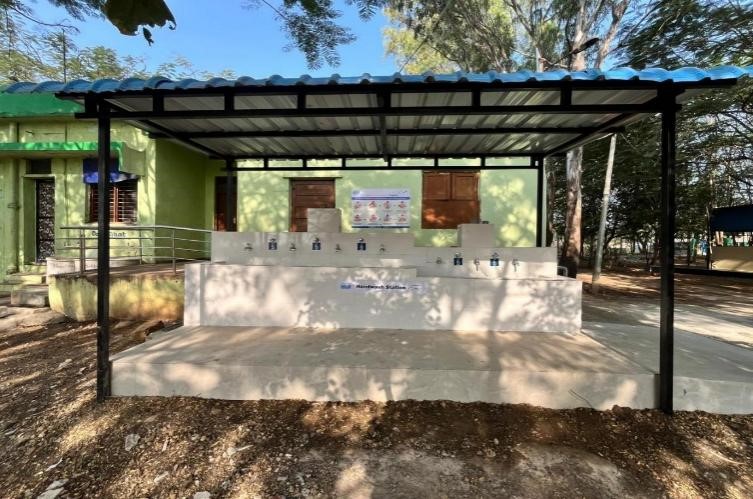
Sairupa Dola, Asifabad
This case study is part of the Holistic Rural Development Project (HRDP) implemented by the Centre for Youth Development and Activities (CYDA), supported by HDFC Bank under its Parivartan programme in Kumuram Bheem Asifabad District, Telangana. In Mengubaiguda village, 54-year-old Bhembai and her family of three survived on seasonal agricultural labour, earning just ₹2,500 per month. Despite financial vulnerability, she remained resilient and determined to improve her family’s future.
On the occasion of the International Year of Women farmers, Sairupa Dola reports from Asifabad, Telangana.
Kumuram Bheem Asifabad district is predominantly a tribal and rainfed region, where most households depend on seasonal agricultural labour for survival. Limited irrigation facilities, absence of household-level water sources and increasing variability in rainfall make vegetable cultivation particularly challenging during dry periods. In this context, women bear a disproportionate burden of managing household food needs with very limited resources.
Bhembai a resident of a Mengubaiguda tribal village of Kumuram Bheem, district. Her family completely depends on agricultural wage labour. The annual income of the family is approximately Rs. 30000/-, as their work was not that regular. During off seasons when no farm work was available, managing food for the family became very difficult, which led to worries, stress and lack of confidence. The family relied almost entirely on the local market for vegetables and millets. The lack of a reliable water source at the household level was a critical barrier to initiating any home-based vegetable cultivation.
Bhimbai used to spend Rs. 1,000/- to Rs. 2,000/- every month to buy vegetables from the market. At times, due to a lack of money, they skipped consuming vegetables in their food. Fresh vegetables were not a part of their meals. She often felt stressed and helpless, especially as a young woman trying to take care of her family.
CYDA and HDFC Bank – Parivartan provided integrated agriculture and livelihood support to the family.
• Promotion of a household-level 10*10 kitchen garden providing seeds, neemoil, vermicompost, drip irrigation system installation with training on sustainable cultivation practices.
• Access to the community-managed Agriculture Tool Bank for timely and affordable use of farm tools
• Exposure to cotton demonstration plots showcasing improved and low-cost agronomic practices
• Guidance on the use of organic inputs, millets and locally available resources to reduce dependency on external markets.
A small garden, A big change
Everything began to change when she started a 10×10 kitchen garden by using a simple gravity based drip irrigation system. In the beginning, she was unsure – would the crops grow? Would there be enough water? Would it really help? But when the first harvest came, her heart was full of pride. Tomatoes, leafy vegetables and other fresh crops grew right behind her house. For the first time, she felt confident and was no longer dependent on the market. The savings and extra income together significantly improved their financial stability.
Today, her family…….
Consumes fresh vegetables through out the week.
Saves Rs.1,000/- to Rs.2,000/- per month on vegetable expenses.
Earns an additional Rs.5,500/- seasonal income by selling surplus vegetables.
Impact
• Efficient use of limited water resources and reduction in water wastage
• Regular and timely irrigation leading to healthier crop growth
• Reduction in physical labour and time spent on manual watering
• Improved survival rate of vegetable plants during dry spells
• Enhanced vegetable yields, contributing to both household consumption and surplus sale.
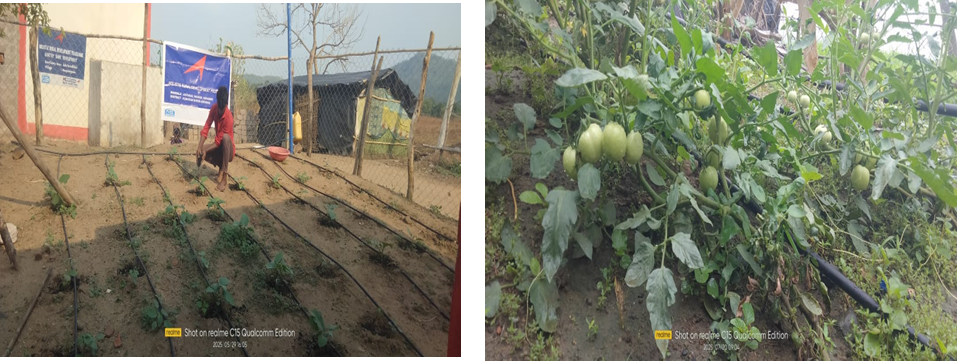
Bhembai manages water storage, monitors drip lines and ensures timely irrigation for the crops. This enhanced her technical skills and strengthened her leadership role in household-level agricultural decision-making.
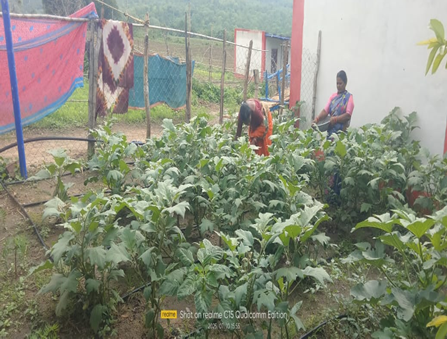
From the 100 sq m kitchen garden, the household harvested approximately 110 kgs of mixed vegetables in one season, including brinjal, tomato, beans, leafy vegetables, and spinach. This level of production is consistent with standard kitchen garden yield norms (1–1.5 kg per sq m per season) and reflects conservative, field-realistic outcomes.
Nearly 65–70% of the produce was consumed at the household level, directly contributing to improved food security and dietary diversity. The remaining surplus was sold in the weekly local market, generating approximately Rs.1,050/- as supplementary income in a single season.
A change in Identity
Today, Bhimbai feels strong and capable. She has saved seeds from tomatoes and leafy vegetables for the next season. She confidently says, she will continue the garden even without further support. Her role in the village has also changed. Other women now come to her for advice on crop planning and drip irrigation. Around 4 to 6 women have already started preparing small kitchen garden plots after seeing her success. She actively participates in women self help group meetings and shares her experience confidently. From being a silent labourer, she is now seen as a motivated young farmer in her hamlet.
“With the support of CYDA and HDFC Parivartan, we started a kitchen garden at our home. Now we get fresh vegetables regularly and do not need to spend money at the market. I feel confident that I can support my family’s food needs on my own.” — Bhimbai