
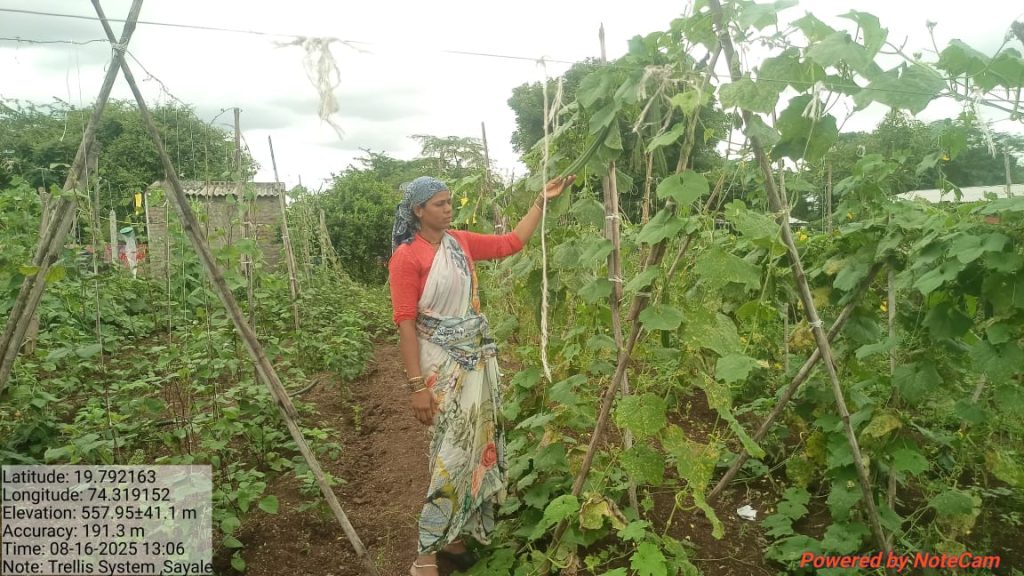
Across the world, women cultivate crops, manage livestock, preserve seeds, and sustain families—yet their contributions remain largely unrecognized. The United Nations has declared 2026 the International Year of the Woman Farmer (IYWF 2026), spotlighting their vital role in food security, nutrition, climate resilience, and rural economies. ImpactLens will amplify their stories and advocate strengthening women’s livelihoods globally. Rakesh Khainar, CYDA, writes from Nashik.
In the small village of Sayale in Sinnar block of Nashik district lives 34-year-old Anjana Balasaheb Lohakare, a smallholder farmer who owns one acre of land. She once depended mainly on daily wage labour to support her family, but work was not always available. “वेळेवर काम मिळत नव्हते, भाजीपाला मिळत नव्हते,” (Work was not available on time, and we did not even get vegetables regularly). she says Some weeks she earned only Rs. 800/- to Rs.1000/- and even that income was irregular and unreliable. On her farm, she grew only maize and soybean, crops that required a lot of water and brought very little profit despite her hard work. She was very much worried about her family.
Few months ago, under the initiative Integrated Rural Development Programme implemented by Centre for Youth Development and Activities, with the support of the PwC Foundation, she was introduced to trellis farming, a water-efficient and space-saving method of vegetable cultivation. This was a new beginning for Anjana to learn new techniques to learn. She received practical support including
- 10 cement poles
- Wire for trellis structure
- Seeds of seven vegetable varieties
- Vermicompost bed
- 200 litres water tank.
More importantly, she received hands-on guidance and training from CYDA on crop planning, water management and sustainable farming practices. She learnt how to grow vegetables vertically, how to use water carefully and how to maintain soil health through organic practices.

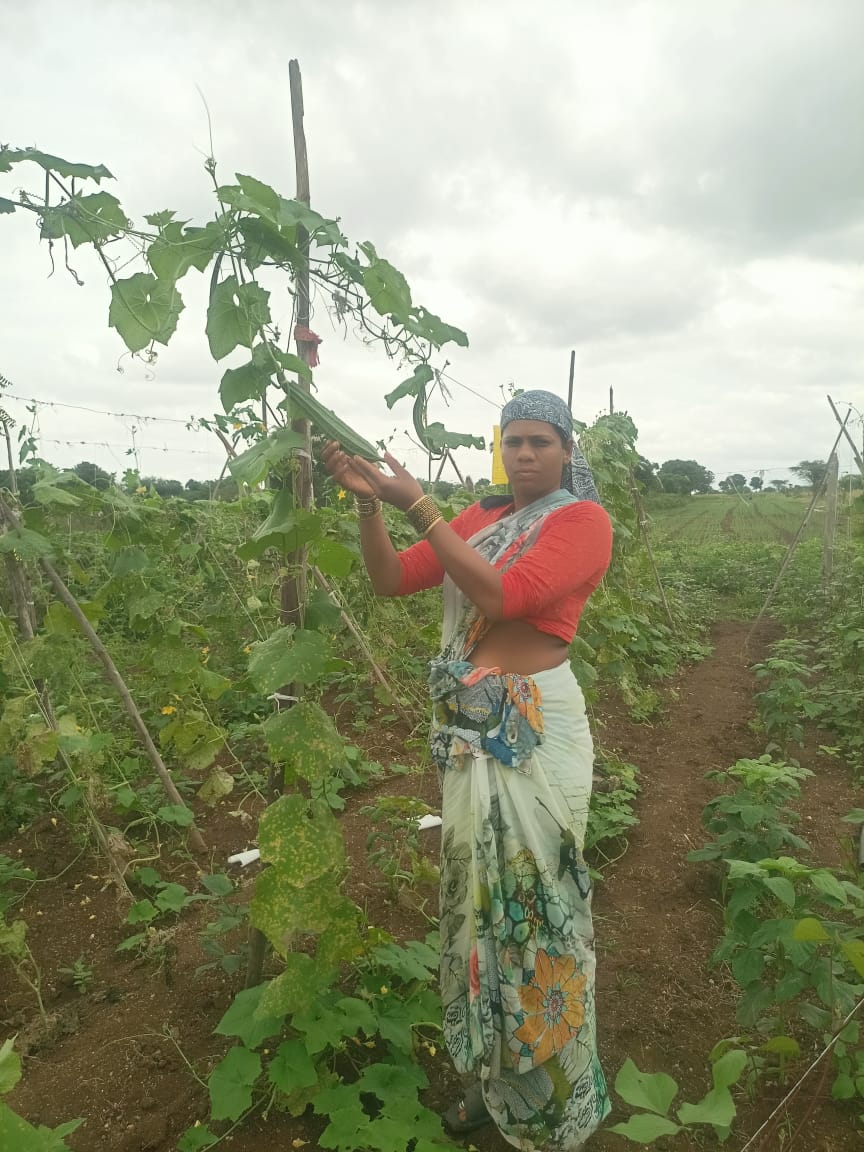
With a strong will power and careful planning, Anjana began cultivating sponge gourd, cucumber, pumpkin, chilli, tomato, brinjal, okra and cowpea. Gradually, her small and simple piece of land began to change. Small green plants started spreading across the field, climbing on the trellis and growing healthy day by day. What was once an almost empty piece of land slowly turned into a fresh, lively farm filled with different vegetables, giving her hope and happiness every time she looked at it.. Today, her farm produces 7–10 kgs of fresh vegetables every week. This ensured nutritious food for her family throughout the year and also generated an additional income of Rs.500/- to Rs.800/- per week through sales in the local market.
Beyond numbers, the real success lies in her confidence. Anjana no longer waits for daily wage work. She makes decisions about her crops, plans her irrigation and manages her sales. The change from traditional low-yield crops to diversified vegetable farming has reduced water use and increased productivity on her small landholding.
“Earlier, I depended on daily wage work, and income was uncertain. Today, my own farm gives me fresh vegetables and regular income. I feel confident that I can support my family through my own efforts.” – Anjana
When women farmers receive the right support, knowledge, and resources, they transform not only their own lives but also their families and communities. Anjana has become a role model in her village. Other women now visit her farm, eager to learn about trellis farming and sustainable practices.
