Written By Anamika Dey, Project Coordinator, Nandurbar
Supported by Kcorp Charitable Foundation
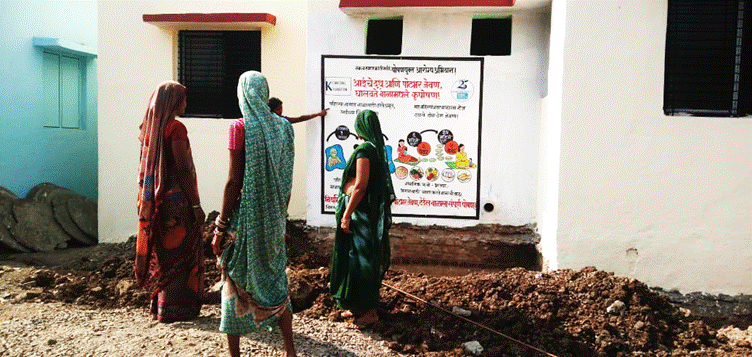
There are many ways to create awareness in a community, such as meetings, street plays, group discussions, posters, and digital campaigns. Among these, visual communication through wall paintings is one of the most powerful. It reaches people of all ages, even those who cannot read, and helps important messages stay in their minds. Wall paintings make information simple, clear, and visible every day. With this approach, CYDA is using art to spread awareness on maternal health, child nutrition, and the risks of early pregnancy in rural communities.
Good health and proper nutrition are the foundation of strong communities, especially in rural areas where access to information is often limited. Many families do not always receive regular health information, so these colourful and simple drawings help them understand important messages about pregnancy care, hygiene, nutrition, and early treatment. Health and nutrition play a major role in shaping the well-being of women and children, particularly in rural areas. This visibility makes the information easy to remember, even for those who cannot read well. Because the paintings are placed in public places like anganwadis, schools and community walls, where people see them every day, which strengthens their healthy habits.
To address critical issues affecting women, adolescents, infants, and young children and spread awareness on the ill effects of early pregnancy and the importance of proper nutrition during the first 1000 days, Centre for Youth Development and Activities undertook an important initiative through wall painting in 10 villages of Shahada Block including Ranipur, Lakkadkot, Chirde, Nagziri, Fattepur, Pimprani, Kevdipani, Navagaon, Virpur, and Talawadi on two key themes:
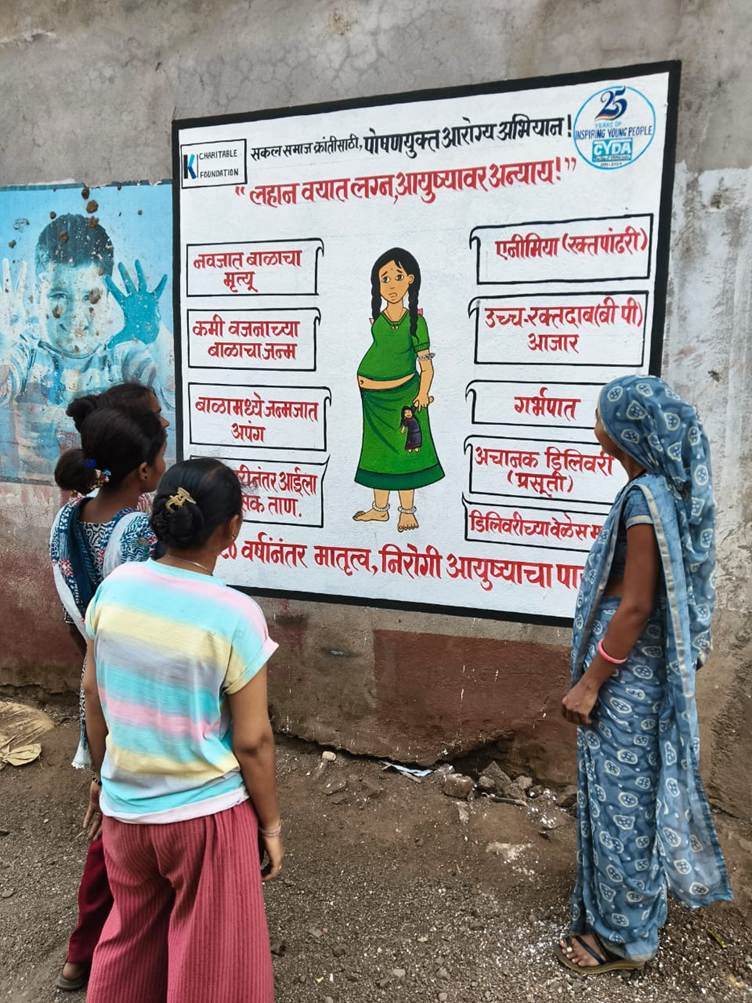
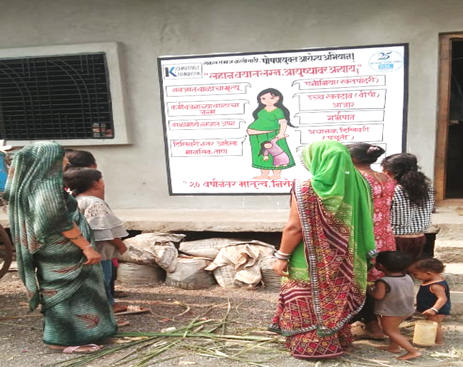
1.The ill-effects of early pregnancy – highlighting risks such as maternal anaemia, low birth weight, complications during delivery, and increased chances of infant mortality.
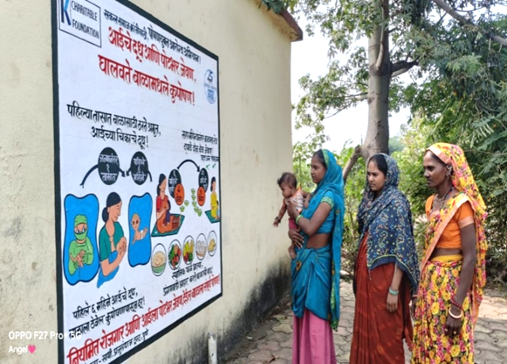
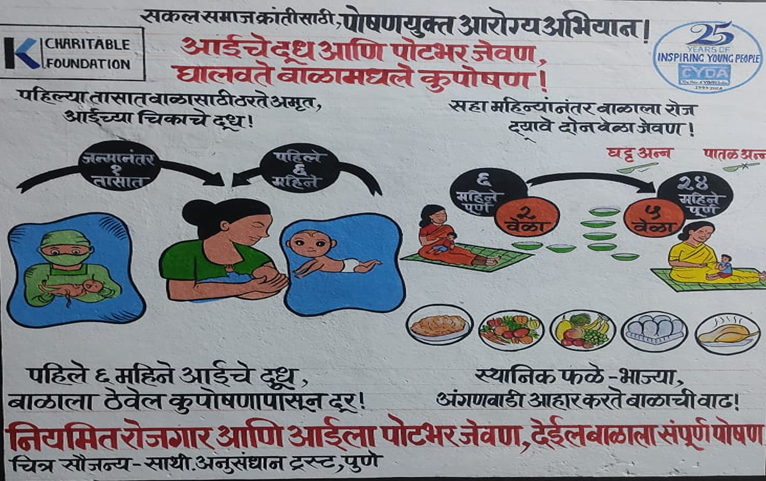
2.Infant and Young Child Nutrition under the First 1000 Days approach – emphasizing exclusive breastfeeding, timely initiation of complementary feeding, proper dietary diversity, and regular growth monitoring.
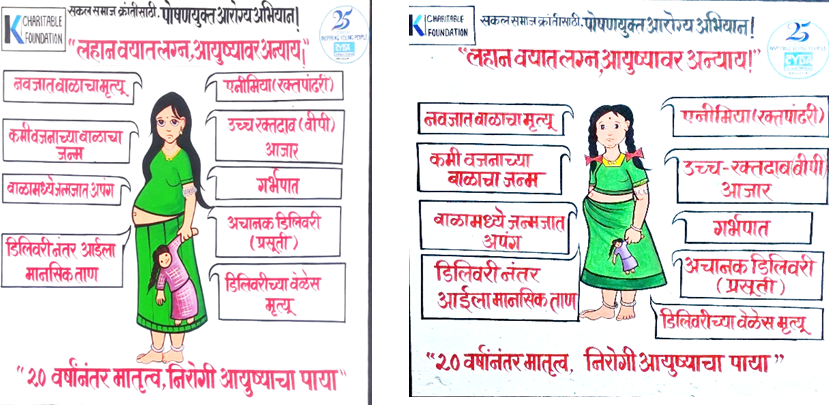
Together, these factors control the long-term health, growth and development of both mother and child. These paintings visually explain the risks of early pregnancy – such as maternal anaemia, low birth weight, delivery complications and higher chances of infant mortality. These messages make easy for adolescents, families, and community members to understand.
Similarly, the wall painting highlights essential Infant and Young Child Nutrition practices, including exclusive breastfeeding, timely complementary feeding, dietary diversity, and regular growth monitoring. By displaying this information in a simple and eye-catching manner, CYDA ensures that people receive continuous reminders about good health and nutrition practices. The wall paintings serve as long-lasting educational tools, helping build awareness, encouraging behaviour change, and supporting the overall goal of creating healthier mothers and children in rural areas.
By presenting these messages visually on community walls, CYDA ensures that adolescents, parents and community leaders clearly understand why delaying pregnancy is critical for the health of both mother and child. CYDA’s wall paintings highlight the importance of exclusive breastfeeding for the first sixmonths, which provides complete nutrition and protects infants from common illnesses. After six months, the artworks explain the need for timely complementary feeding, where soft, nutritious foods are introduced while continuing breastfeeding.
The paintings also promote dietary diversity, encouraging families to include various foods such as – grains, pulses, vegetables, fruits, dairy, and eggs, so children receive all the nutrients they need. Another key message is regular growth monitoring, which helps parents identify early signs of malnutrition and seek timely support from anganwadis or health centres.
Visible Impact on Villagers:
The wall paintings have created noticeable awareness in the community. Villagers, especially adolescent girls and young mothers, have shown increased curiosity and discussions around early pregnancy risks and appropriate child feeding practices. Local health workers reported that families are referring to the paintings during conversations on nutrition and ANC, indicating improved understanding and positive behavior shifts.