By Shaheena Mannasaheb
Supported by the Persistent Foundation
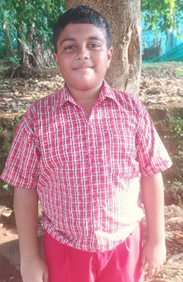
Adolescence is a phase filled with exploration, uncertainty, and growing social influence. Under the TARANG Life Skills and WASH initiative supported by CYDA and the Persistent Foundation, many young learners are developing the skills they need to navigate these challenges with confidence. Ansh, a 13-year-old student from MIBK High School, Goa, whose transformation illustrates the impact of structured life skills education on adolescents’ emotional and social well-being.
When Ansh entered early adolescence, he often struggled to choose the right peer group. He was surrounded by diverse influences; some friends were focused on academics and creativity, while others engaged in disruptive behaviour such as skipping classes or showing disrespect toward teachers. These badly interrupted Ansh as he experienced increasing anxiety, confusion, and emotional stress. His ability to focus in school began to weaken. Like many adolescents, he lacked the social decision-making skills needed to navigate peer pressure and form meaningful, healthy relationships.
TARANG – Talking to Adolescents on Reproductive Health and Gender
To help students like Ansh gain clarity and confidence, CYDA has introduced structured life skills sessions under the TARANG program. One of the key activities focuses on understanding the qualities of a good friend—honesty, encouragement, trust, and mutual respect. Students consider the kinds of friends who help them grow and how peer influence shapes their behaviour and decisions.
The workshop covers assertive communication, recognising and dealing with peer pressure, emotional awareness, self-reflection, and responsible decision-making. These activities encourage students to share their experiences openly and learn from one another, helping them understand the difference between positive and negative peer influence.
The sessions are interactive, participatory, and student-centered. Facilitators use group discussions, games, role plays, reflection exercises, and action-based learning to keep students engaged and help them connect these lessons to their everyday lives.
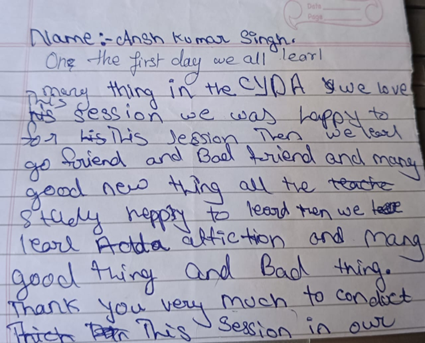
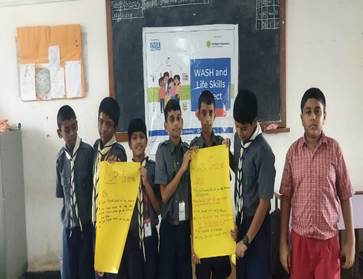
During the session, Ansh becomes an active participant. As he explored real-life situations through discussions and activities, he slowly began to understand how peer influence affects his decisions. Ansh, while sharing his experience, said that, “I learnt that real friends are those who help you grow and stay positive. Now I can say no when something does not feel right.”
Teachers also noticed positive changes in his engagement, confidence, and classroom behaviour. After the sessions, Ansh became more thoughtful and confident in his choice of company. He now guides others to avoid harmful habits.Overall, 95.3% of students, including Ansh, can now confidently say “NO” to peer pressure—a significant rise from the 51.3% baseline. Similarly, 98.8% of students report positive behavioural changes, showing a 47% improvement from the pre-intervention level. Ansh has started choosing friends who support his goals. His anxiety has reduced as he gains clarity in social situations. His decision-making has improved in both academics and personal life. He has become more expressive, confident, and emotionally aware.
